
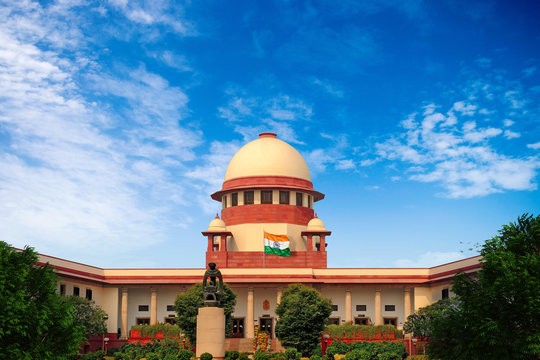
In a matter of constitutional significance, a Constitution Bench of the Supreme Court is scheduled to begin hearing on July 22 a Presidential Reference seeking clarity on whether the judiciary can prescribe timelines and procedures for the President and State Governors in granting or withholding assent to State legislation.
The reference, titled In Re: Assent, Withholding, or Reservation of Bills by the Governor and President of India, was made under Article 143(1) of the Constitution by President Droupadi Murmu, who has sought the Supreme Court’s advisory opinion on issues of constitutional interpretation and public importance.
The Constitution Bench comprising Chief Justice of India DY Chandrachud, and Justice Surya Kant, Justice Vikram Nath, Justice PS Narasimha, and Jusitce Atul S. Chandurkar, has been constituted to consider the scope of judicial review and the limits of constitutional discretion under Article 200 and Article 201.
The reference arises in the backdrop of the Court’s earlier ruling in a petition filed by the State of Tamil Nadu, where it was held that Governors cannot indefinitely delay action on Bills passed by State legislatures. A Bench led by Justice JB Pardiwala and Justice R Mahadevan had observed that while Article 200 does not stipulate a specific timeframe for action, it cannot be interpreted to allow prolonged inaction, which would effectively stall the legislative process.
Significantly, the Court had also held that the President’s decision under Article 201 must be made within three months, and any delay must be justified with recorded reasons and communicated to the concerned State. The judgment further stated that both Articles must be understood in a manner that furthers constitutional accountability and federal cooperation.
However, this interpretation triggered sharp criticism from Vice President Jagdeep Dhankhar, who questioned whether the judiciary can impose time-bound directives on the President of India, a high constitutional authority. Speaking at a public event, he expressed concern over what he termed a judicial overreach into legislative and executive domains.
In response to the Court’s judgment, President Murmu referred fourteen questions to the Supreme Court, seeking clarification on whether the judiciary can fill constitutional silences by issuing binding timelines for constitutional functionaries, and whether the concept of “deemed assent”, introduced by the Court in the absence of timely gubernatorial or presidential action, has any constitutional foundation.
The reference argues that Article 200 and Article 201 do not expressly empower the Court to mandate such timelines and asserts that the idea of an automatic or deemed assent runs contrary to the text and spirit of the Constitution. It further emphasizes that legislative functions and judicial interpretation must remain within their respective spheres to maintain the separation of powers.
The Constitution Bench will now deliberate on whether the judiciary can prescribe procedures and timeframes in areas where the Constitution is silent, particularly when such directions concern high constitutional offices like that of the President and Governors.
The outcome of this hearing is poised to have far-reaching implications for the balance of powers among the three branches of government and will likely define the limits of judicial intervention in matters of constitutional discretion.